The Bottle's One Claim Against the Sales Page's Five
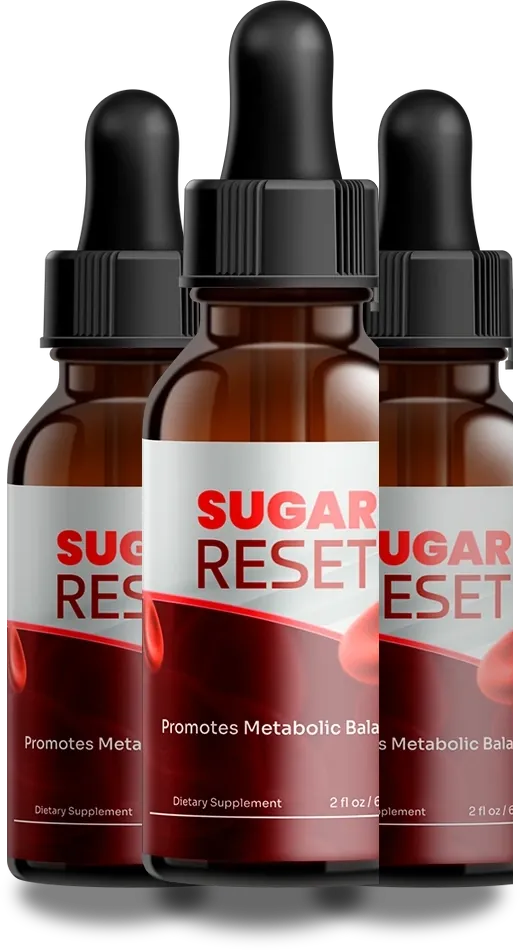
The bottle itself claims one thing: “Promotes Metabolic Balance.” The page that sold it to you adds five more lines about insulin, blood sugar, carbs, weight and overall metabolic health. All five are the seller's own wording, not a measured result, and none of them says this lowers blood sugar or treats diabetes.
What does the bottle claim, and what did the sales page add?
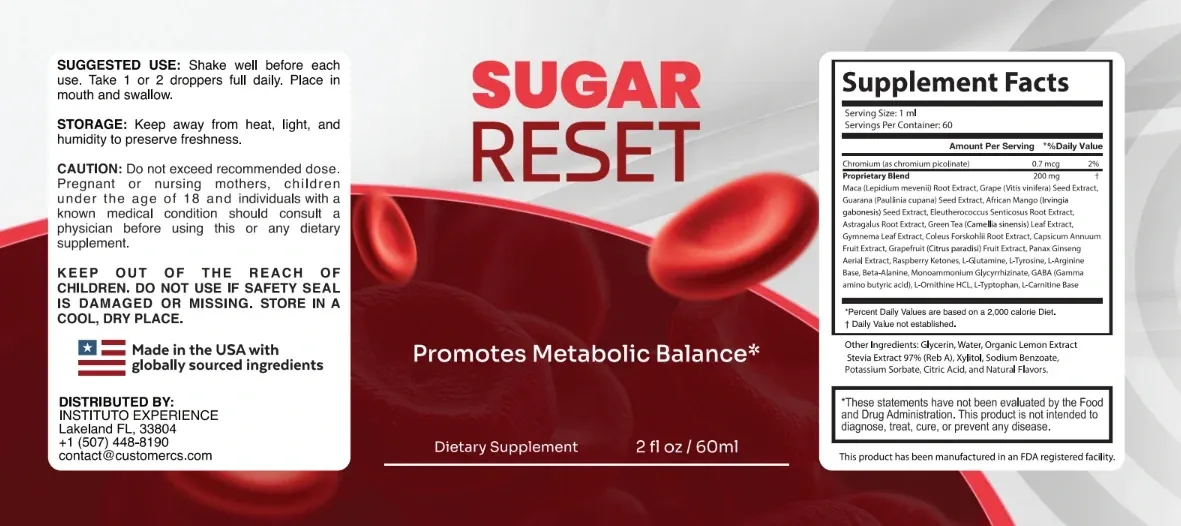
Before you weigh up whether this is worth your money, it helps to separate what the bottle actually says from what convinced you to buy it. The front label carries one line: “Promotes Metabolic Balance.” Everything else you likely read about insulin or blood sugar came from the sales page, not the Supplement Facts side of the bottle.
That gap between the label and the pitch is not unusual for a supplement, but it is worth seeing laid out plainly, line by line, before you decide what a fair expectation looks like and whether it matches whatever brought you to this bottle in the first place.
Six lines, laid out together
| Where you read it | The exact wording |
|---|---|
| Front label | Promotes Metabolic Balance |
| Sales page, line 1 | Promote Healthy Insulin Function |
| Sales page, line 2 | Support Balanced Blood Sugar Levels |
| Sales page, line 3 | Aid in Managing Carbohydrate Metabolism |
| Sales page, line 4 | Assist in Maintaining a Healthy Weight |
| Sales page, line 5 | Contribute to Overall Metabolic Health |
Six lines in total: one on the bottle, five on the sales page. Not one uses the word "treat," "cure," "prevent" or "lower," and none names a lab value it promises to move.
Does this match what actually brought you here?
Match the five sales-page lines against whatever actually brought you here, and the picture sharpens. People land on this product for a handful of different reasons, and the claim set does not back them all equally.
| What brought you here | What these six lines can fairly support |
|---|---|
| Worry over a blood sugar reading | A structure or function line about balance, not a promise that number moves. |
| Wanting to drop a few pounds | One line about maintaining a healthy weight, not a stand-alone weight plan. |
| Feeling sluggish after big meals | Nothing on the label or sales page addresses energy or alertness directly. |
| Hoping to cut back on medicine | None of the six lines mentions medicine, and cutting back should never follow from a supplement alone. |
| Wanting extra insurance alongside a healthy routine | The closest fit: a daily habit that sits beside food, movement and sleep, not ahead of them. |
What each of the five sales-page lines actually means
| What the sales page says | What it means | What it does not mean |
|---|---|---|
| Promote Healthy Insulin Function | Insulin moves sugar out of the blood into your cells. | Not a claim that it changes how insulin behaves, or is cleared to affect it. |
| Support Balanced Blood Sugar Levels | "Balanced" is a general aim with no target figure attached. | Not a promise that a fasting reading or A1c will move. |
| Aid in Managing Carbohydrate Metabolism | Carbohydrate metabolism is simply how your body breaks carbs down. | Not a claim that carb digestion or absorption changes. |
| Assist in Maintaining a Healthy Weight | Weight is driven by food, movement, sleep and medicine together. | Not weight loss on its own, without diet and activity doing the work. |
| Contribute to Overall Metabolic Health | A broad umbrella covering several separate metabolic measures at once. | Not a promise that any single number on a test will shift. |
Under US supplement rules these count as structure and function statements: a plant or nutrient can be said to support a normal process, but it cannot be sold as treating, curing or preventing a disease.
Why does the wording stay this vague?
US law is the reason the sales page reaches for words like “support” rather than a treatment promise. A supplement can print a structure or function claim, saying an ingredient helps a normal body process along. It cannot say it treats, cures or prevents a disease, or acts the way an approved drug does, without drug-level testing behind it.
That same rule is likely why the front label stops at one broad phrase, while the sharper insulin and blood sugar wording sits only on the sales page. Neither uses “treat,” “cure” or “lower” next to blood sugar, even though chromium and gymnema do carry some research aimed at blood sugar specifically (National Center for Complementary and Integrative Health (NCCIH), 2024).
It also explains why the five sales-page lines sound close cousins of each other. A seller staying inside the structure or function rule only has so many ways to say “may support how the body handles sugar and weight” without wandering into disease-claim territory, so five variations on one theme is roughly what you would expect to see.
How much research backs these five lines?
How much research actually stands behind the ingredients closest to these five lines? Chromium and gymnema carry the most direct link to blood sugar and insulin, and reviewers call that link limited and inconsistent, not settled (Costello et al., 2016; Yeh et al., 2003). African mango has mostly been studied for weight, in small, weak trials (Onakpoya et al., 2013). Maca and Panax ginseng, the other two the sales page names, are not studied as blood sugar ingredients in the sources we checked.
Fuller detail on both mechanisms sits on how it works. What each of the twenty-two blend names actually is: the ingredients page.
What is fair to expect, and what isn't?
Reading the five lines for what they say, rather than for what they imply, changes what a fair expectation looks like. Each one names a normal process the ingredients might support, not a figure the product commits to move. A fair test of this bottle is whether the habit sticks and how you feel, not whether a single reading drops within sixty days.
Reasonable to expect
- A short daily habit, taken in seconds
- Sixty days to decide, backed by the money-back guarantee
- A full, if unweighted, ingredient list to hand your pharmacist
Not on offer
- A drop in blood sugar or A1c
- Treatment, cure or prevention of diabetes or prediabetes
- A stand-in for insulin, metformin or any other prescription
- A reason to stop testing
What people sometimes read in that isn't there
What the label avoids saying matters as much as what it says. None of the rows below appears on the bottle. They are listed because the ingredient names and the sales page wording can nudge a reader toward assuming more than what is printed.
It reads like a lowering claim, but it isn't one
"Support balanced blood sugar levels" sounds close to a promise. It is a wellness statement, not a measured outcome.
A registered facility is not FDA approval
That seal describes the factory, not the formula, and gets misread as approval fairly often.
A liquid is not automatically stronger or faster
Drops can absorb quickly, but speed does not add ingredients or raise the amount inside each one.
When any claim is unclear, the printed label outranks the sales page, a seal, or any advert, every single time, plainly.
One thing to settle before you judge any of this
This is not a diabetes treatment. Never stop or change prescribed medicine because of a supplement, and keep testing on your usual schedule unless a clinician says otherwise. If you take insulin, metformin, a sulfonylurea or any other glucose-lowering medicine, ask first, since gymnema and chromium may affect blood sugar too, and stacking effects is exactly how a reading ends up lower than anyone planned.
Full detail on that risk, plus grapefruit, caffeine and the licorice compound, sits on the side effects page.
Benefits: common questions
What does Sugar Reset actually claim to do?
The label claims only "Promotes Metabolic Balance." The sales page adds five lines: healthy insulin function, balanced blood sugar levels, carbohydrate metabolism, weight and overall metabolic health.
Does it lower blood sugar?
No such claim is made anywhere. "Support balanced blood sugar levels" is the sales page's own wording, not a promised or measured result, and no printed amount could support a lowering claim.
Does it treat or prevent diabetes?
No. It is a dietary supplement, not a treatment, and is not sold or intended to treat, cure or prevent diabetes or prediabetes.
What does "Promotes Metabolic Balance" actually mean?
It is the one front-label phrase, a broad structure or function claim. It does not name blood sugar, weight or any specific test result.
Are the five sales-page lines proven?
They are the seller's own wording, not independently proven results. The two ingredients closest to them, chromium and gymnema, have research reviewers call limited and inconsistent.
Can it replace my diabetes medicine?
No. A supplement is never a reason to stop or alter a prescription. Ask a clinician first if you already take glucose-lowering medicine.
Is Sugar Reset FDA approved?
No. Dietary supplements are not FDA approved products. A registered facility is a factory listing, not approval of the formula.
Why doesn't the front label mention blood sugar directly?
US rules allow broad structure or function claims but not disease claims. The sharper blood sugar wording sits on the sales page, not the label.
Start the Sugar Reset routine from the authorized outlet
Sixty 1 ml doses fill every bottle, and the kits work out at $79, $69 or $49 a bottle with sixty days to ask for a refund. Not sure which kit fits your routine? The kit comparison sets them side by side.