How to Read a Supplement Facts Panel, Line by Line
Any Supplement Facts panel breaks down the same way: serving size and servings per container, then each nutrient's amount and %DV, then a proprietary blend that hides individual amounts behind one total, listed heaviest first. Watch mcg versus mg, read Other Ingredients for allergens and fillers, and know that a structure and function claim, unlike a drug claim, describes support, not a cure.
Where do I even start on a Supplement Facts panel?
Two numbers at the top decide what every other number on the panel actually means.
Start at the top, not the ingredient list. "Serving Size" tells you what one dose actually is, and "Servings Per Container" tells you how many doses the whole bottle holds. Multiply the two and you know the total amount of the product you bought, before a single ingredient enters the picture.
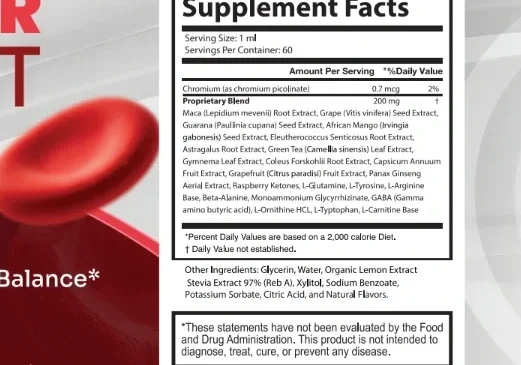
On the Sugar Reset panel, Serving Size is 1 ml and Servings Per Container is 60. That means one bottle holds 60 ml of usable product inside its 2 fl oz (60 ml) bottle. If a label ever lists two droppers as one serving instead of one, the whole panel underneath doubles in real terms, so always check this line first.
What does %DV actually tell me?
%DV stands for percent Daily Value, a reference amount set for label purposes, not a personal target. It tells you how much of an established daily need one serving supplies for that nutrient, when a Daily Value has been set at all.
| What you see | What it means | On the Sugar Reset panel |
|---|---|---|
| A number with a % sign | A Daily Value exists, and the serving supplies that share of it | Chromium: 0.7 mcg, 2% DV |
| A dagger (†) instead of a % | No Daily Value has been established for that ingredient | Proprietary Blend: 200 mg † |
| No entry at all for an ingredient | The panel is not required to give one for every listed item | Individual blend amounts are not printed |
A dagger is not a red flag by itself. Many botanical ingredients simply have no federally set Daily Value, so a dagger there is normal. What matters is whether you can still find the actual amount elsewhere on the panel, which a proprietary blend, covered next, is built specifically to avoid.
What is a proprietary blend, and why can't I see each amount?
- Maca Root Extractnot published
- Grape Seed Extractnot published
- Guarana Seed Extractnot published
- African Mango Seed Extractnot published
- Eleuthero Root Extractnot published
- Astragalus Root Extractnot published
- Green Tea Leaf Extractnot published
- Gymnema Leaf Extractnot published
- Coleus Forskohlii Root Extractnot published
- Capsicum Annuum Fruit Extractnot published
- Grapefruit Fruit Extractnot published
- Panax Ginseng Aerial Extractnot published
- Raspberry Ketonesnot published
- L-Glutaminenot published
- L-Tyrosinenot published
- L-Arginine Basenot published
- Beta-Alaninenot published
- Monoammonium Glycyrrhizinatenot published
- GABA (gamma-aminobutyric acid)not published
- L-Ornithine HCLnot published
- L-Tryptophannot published
- L-Carnitine Basenot published
The equal bars are a stand-in, not a measurement. Twenty-two names sit inside a single 200 mg figure on the label. An even split would give roughly 9 mg apiece, yet the maker never says how the 200 mg is shared.
A proprietary blend is a legal way to print one total weight for a group of ingredients instead of a separate amount for each one. US labeling rules allow it as long as the ingredients inside are listed in descending order by weight, heaviest first, lightest last.
- A blend total in mg or mcg, followed by a dagger
- A list of every ingredient sharing that total, heaviest first
- No individual amount printed for any single ingredient inside it
- The order of the list is your only clue to proportion
On this label, the Proprietary Blend totals 200 mg across 22 ingredients, from maca root down to L-carnitine base. Maca leads the list, so it likely makes up the largest share; L-carnitine trails it, so it likely makes up the smallest. Split evenly across 22 items, 200 mg averages out to about 9 mg each, though the real split is almost certainly uneven and is never printed.
Why does mcg versus mg matter so much?
A milligram (mg) is a thousand times bigger than a microgram (mcg). Mixing the two up while skimming a label is an easy way to badly misjudge a dose, especially on a panel that uses both units on the same page.
| Unit | Relative size | Why it trips people up |
|---|---|---|
| mcg (microgram) | 1/1,000 of a milligram | Trace minerals like chromium are often printed in mcg, and it looks similar to mg at a glance |
| mg (milligram) | 1,000 micrograms | Most blend and vitamin amounts appear in mg |
| g (gram) | 1,000 milligrams | Rare on a supplement panel, but common in research doses quoted for the same ingredient |
On this label, chromium is printed as 0.7 mcg. That is a genuinely small number, not a typo, and it is worth comparing against whatever dose a study you read about actually used, since research on an ingredient is very often reported in a different unit than the one printed on a bottle.
Why should I read the Other Ingredients line?
"Other Ingredients" lists everything in the product that is not a nutrient or the active blend. This line is exactly where to look for a common allergen, a sweetener you want to avoid, or a preservative that matters to you for another reason.
This label's Other Ingredients read: Glycerin, Water, Organic Lemon Extract, Stevia Extract 97% (Reb A), Xylitol, Sodium Benzoate, Potassium Sorbate, Citric Acid, and Natural Flavors. None of those are federally recognised top allergens, but two are worth a second look for other reasons: xylitol is a sugar substitute that is safe for people but toxic to dogs, so keeping the bottle away from pets matters, and sodium benzoate and potassium sorbate are preservatives some people prefer to avoid on principle.
- Scan for the eight major recognised food allergens by name
- Note any sweetener, dye or preservative you personally avoid
- Check whether a liquid, capsule or gummy base changes anything for a dietary restriction
How do I hunt for allergen and interaction risks?
The ingredient list itself is where a real interaction risk usually hides, not the front label. Once you know what is inside, a quick search or a question to a pharmacist can catch a problem before it starts, rather than after.
List every ingredient by name
Not just the headline ones from a sales page. Everything printed inside a blend counts too.
Flag anything with a known effect on blood pressure, blood sugar or blood thinning
Grapefruit, licorice-derived compounds, caffeine sources and certain botanicals are common culprits.
Check it against your own prescriptions
A pharmacist can do this quickly and is often the fastest, most reliable route.
Recheck after any label update
A reformulation can add or drop an ingredient without changing the front-of-bottle claim.
On this label, grapefruit fruit extract, guarana and green tea (caffeine sources) and monoammonium glycyrrhizinate (a licorice-derived compound) are the three worth flagging for a pharmacist conversation before combining this or any similar blend with a prescription (National Center for Complementary and Integrative Health (NCCIH), 2024).
What is a supplement claim actually allowed to say?
What a label is legally allowed to say depends on which kind of claim it is making. In the United States, a dietary supplement can carry a structure and function claim, describing support for a normal body process, but it cannot carry a disease claim without going through drug regulation first.
| Claim type | What it can legally say | What it cannot say |
|---|---|---|
| Structure and function | "Supports", "promotes" or "contributes to" a normal process | That it treats, cures or prevents a named disease |
| Nutrient content | That a product contains or is a source of a named nutrient | A specific health outcome from that nutrient at this dose |
| Disease claim | Reserved for approved drugs, after FDA review | Never appears legitimately on a supplement label |
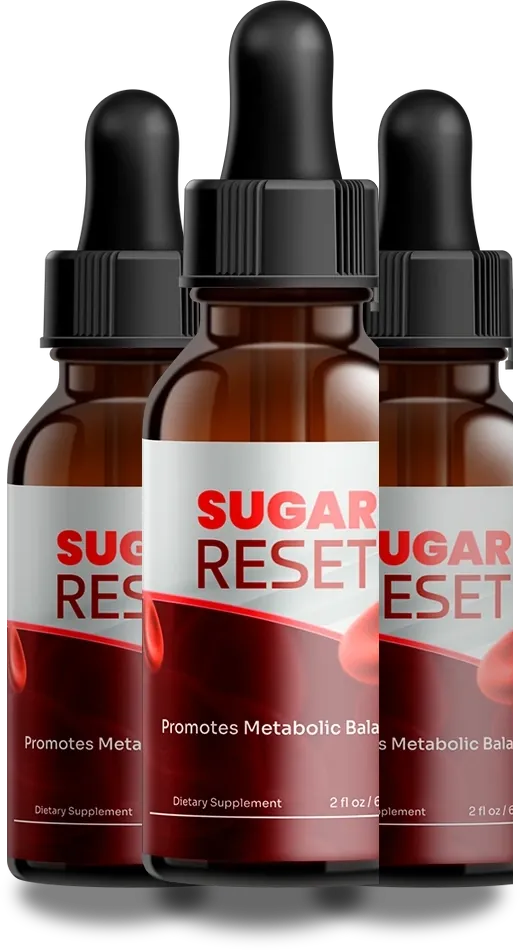
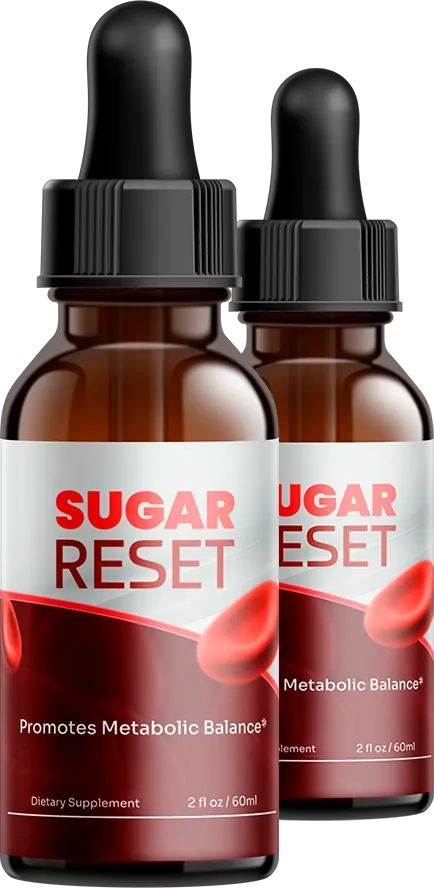
This label's own front claim, "Promotes Metabolic Balance", is a structure and function claim, and the asterisk points to the standard FDA disclaimer: the statement has not been evaluated by the FDA, and the product is not intended to diagnose, treat, cure or prevent any disease. Read that line on every supplement, not just this one.
What does this actually look like on one real panel?
Put it all together, and here is what this specific panel is really telling you. A worked example is often easier to follow than the rules alone.
| Line on the panel | What it says | What it means for you |
|---|---|---|
| Serving Size | 1 ml | One dropper is one full dose |
| Servings Per Container | 60 | A bottle covers 60 doses, or 60 days at one a day |
| Chromium (as chromium picolinate) | 0.7 mcg, 2% DV | A tiny, precisely stated amount, far below doses used in chromium research |
| Proprietary Blend | 200 mg † | One total shared by 22 ingredients, none individually disclosed |
| Other ingredients, word for word | Glycerin, water, stevia, xylitol and more | The carrier and flavoring, worth a scan for allergens or pet safety |
None of that makes the product fraudulent. It simply means the panel gives you a full ingredient list and one firm number, and asks you to trust the rest. Knowing that is the whole point of learning to read the panel yourself rather than taking a sales page's summary of it. Our own Sugar Reset Supplement Facts page walks this exact panel top to bottom, and the ingredients page gives each of the 22 blend items its own research note.
How to Read a Supplement Label: common questions
What is the very first thing to check on a Supplement Facts panel?
Serving size and servings per container. Everything else on the panel is only meaningful once you know what one serving actually is.
What does a dagger symbol mean instead of a %DV?
It means no Daily Value has been established for that ingredient, which is common for many plant extracts and does not by itself signal a problem.
Why can't I see the amount of each ingredient in a blend?
US rules let a maker print one combined total for a proprietary blend, provided the ingredients inside are listed heaviest to lightest, so individual amounts are legally allowed to stay hidden.
How do I avoid mixing up mcg and mg?
Read the unit every time, not just the number. A mcg amount is a thousand times smaller than the same figure written in mg.
Where do allergens usually show up on a label?
In the Other Ingredients line, alongside sweeteners, preservatives and the carrier base, not inside the active-ingredient blend.
What can a supplement label legally claim?
A structure and function claim, describing support for a normal body process. It cannot claim to treat, cure or prevent a disease without drug approval.
Does a proprietary blend mean a product is fake?
No. It means the maker chose a legal option that discloses less. It is worth judging on its own, but it is not evidence of fraud by itself.
Should I check a label myself instead of trusting a sales page?
Yes. A sales page summarizes; the panel is the actual legal document, and the two do not always name the same ingredients.
Keep reading
What does the Sugar Reset panel say in full?
The complete panel, decoded number by number.
Read →What is inside the 200 mg blend?
Every one of the 22 ingredients, with research doses and safety notes.
Read →What interactions should I ask about?
Grapefruit, caffeine, licorice and gymnema, explained plainly.
Read →Start the Sugar Reset routine from the authorized outlet
Sixty 1 ml doses fill every bottle, and the kits work out at $79, $69 or $49 a bottle with sixty days to ask for a refund. Not sure which kit fits your routine? The kit comparison sets them side by side.