Sugar Reset Ingredients: Every Name on the Label
Sugar Reset contains chromium picolinate plus a 200 mg proprietary blend of 22 ingredients.
Chromium has its own line at 0.7 mcg. The blend includes gymnema, African mango, green tea, maca and Panax ginseng, and caffeine, grapefruit and a licorice compound are worth a pharmacist's check.
Before you start, read the side effects page to see who should ask first.
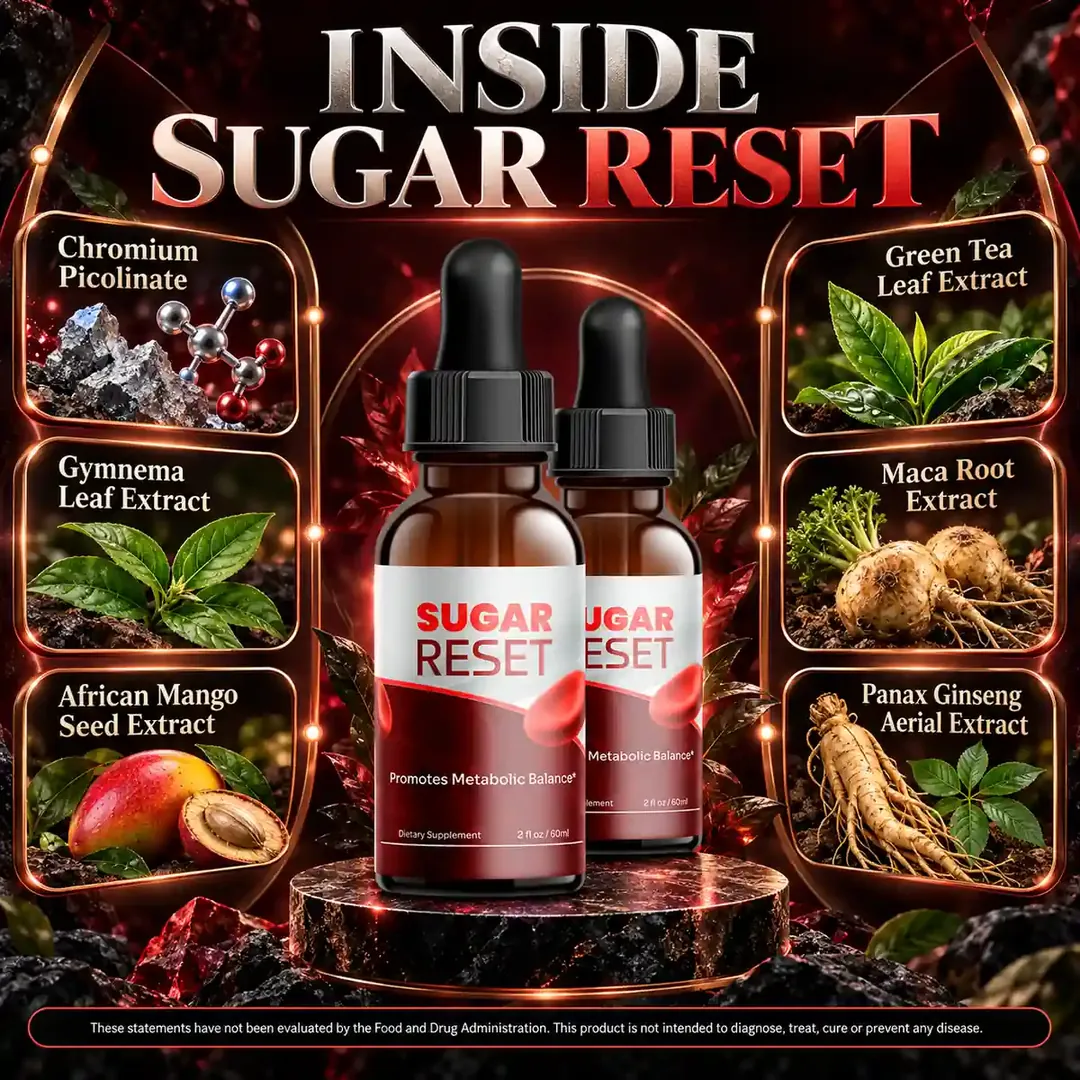
The sales page picked six. Your bottle carries twenty-two.
Six names got a mention on the page that sold you the bottle. Turn the bottle round and the Supplement Facts panel tells a longer story: chromium on its own row, then a 200 mg blend carrying twenty-two ingredients under one total weight.
None of that is hidden, exactly, just printed on the back rather than pitched on the front. A proprietary blend can keep its split private under US rules. Below: every name in that blend, what each is normally sold for, and three things worth a pharmacist's opinion.
Where the sales page and the label part ways
Named on the sales page
- Chromium Picolinate
- Gymnema Leaf Extract
- African Mango Seed Extract
- Green Tea Leaf Extract
- Maca Root Extract
- Panax Ginseng Aerial Extract
Listed on the label
The six above (chromium has its own line) plus these, all inside the same 200 mg blend:
- Grape Seed Extract
- Guarana Seed Extract
- Eleuthero Root Extract
- Astragalus Root Extract
- Coleus Forskohlii Root Extract
- Capsicum Annuum Fruit Extract
- Grapefruit Fruit Extract
- Raspberry Ketones
- L-Glutamine
- L-Tyrosine
- L-Arginine Base
- Beta-Alanine
- Monoammonium Glycyrrhizinate
- GABA (gamma-aminobutyric acid)
- L-Ornithine HCL
- L-Tryptophan
- L-Carnitine Base
Chromium keeps its own row, covered next. The other sixteen names, including grapefruit and a licorice compound, ride along inside that same 200 mg total with no weight shown.
Chromium stands apart from the blend
0.7 mcg, printed as 2% of the Daily Value. NIH's own Adequate Intake for chromium runs 25 to 35 mcg a day for adults, and trials testing chromium against blood sugar used 200 to 1,000 mcg a day (National Institutes of Health, 2024). Your bottle sits well under both.
No other ingredient on this label gets that treatment. Once you cross into the blend heading, twenty-two names share one 200 mg figure and none of them is broken out on its own.
Six ingredients with a research trail worth reading
These are the six the sales page names. Pick any tab for its research dose, how solid the evidence is, and a safety line.
Chromium (as chromium picolinate)
chromium picolinate · trace mineral
Chromium is the one ingredient with an amount of its own on the panel: 0.7 micrograms. The NIH Office of Dietary Supplements and a 2016 review of 20 randomized trials (Costello et al.) call the evidence that chromium improves glucose control in type 2 diabetes limited and inconsistent, and an older meta-analysis saw no benefit in people without diabetes and too little evidence in people with it.
- Per 1 ml dose
- 0.7 mcg (2% of the Daily Value)
- Amount studied
- NIH ODS Adequate Intake is 25-35 mcg/day for adults
- Safety
- No upper intake limit has been set, because typical intakes have not been clearly tied to harm, but NIH ODS warns that kidney or liver disease may raise the risk from high doses and notes isolated reports of kidney failure with chromium supplements.
- Read more
- Costello et al., 2016 · Althuis et al., 2002
Gymnema Leaf Extract
Gymnema sylvestre · leaf
A leaf from Ayurvedic practice, traditionally taken for sugar cravings and blood sugar. In a 2003 systematic review gymnema was one of the herbs with encouraging early glycemic results, though the authors judged the evidence too thin for any firm conclusion.
- Per 1 ml dose
- Inside the 200 mg blend (amount not published)
- Amount studied
- no single established effective dose
- Safety
- On its own gymnema seems to cause few problems, but it lowers blood sugar in the same direction as diabetes drugs; an EFSA risk assessment records cases of serious hypoglycemia when the two were combined, some needing the medicine reduced or stopped.
- Read more
- Yeh et al., 2003
African Mango Seed Extract
Irvingia gabonensis · seed
The seed of a West African tree, marketed for weight and metabolic support. A systematic review found just three small trials with 208 people between them, none properly randomized, blinded or analysed, so the reviewers could not recommend Irvingia gabonensis for that purpose.
- Per 1 ml dose
- Inside the 200 mg blend (amount not published)
- Amount studied
- not established
- Safety
- A dedicated safety review of Irvingia gabonensis in people was not found.
- Read more
- Onakpoya et al., 2013
Green Tea Leaf Extract
Camellia sinensis · leaf
Known mostly for EGCG and its caffeine, and concentrated extracts come with a liver caution. Pooled trials showed a small dip in fasting glucose but no meaningful change in HbA1c or insulin, which points to little longer-term benefit.
- Per 1 ml dose
- Inside the 200 mg blend (amount not published)
- Amount studied
- varied by trial
- Safety
- As a drink, green tea raises few concerns beyond its caffeine (NCCIH). Concentrated extracts are another matter: LiverTox lists more than 100 cases of liver injury tied to green tea extract or EGCG, a few ending in liver failure, transplant or death, and a gene variant carried by 5 to 15 percent of Americans appears to raise the risk.
- Read more
- Xu et al., 2020
Maca Root Extract
Lepidium meyenii · root
A root crop from the Peruvian Andes and the first name in the blend, which makes it the largest share by weight. The trials reviewed so far looked at sexual function and libido, and the evidence there is thin and of low quality.
- Per 1 ml dose
- Inside the 200 mg blend (amount not published)
- Amount studied
- 1.5-3.5 g/day of dried maca root powder, typically for 6-12 weeks
- Safety
- Long-term safety data in people are sparse.
- Read more
- Shin et al., 2010 · Lee et al., 2023
Panax Ginseng Aerial Extract
Panax ginseng · aerial parts
Asian ginseng, but the leaves and stems rather than the root most trials used. Reviews of the small, lower-quality trials on fatigue and erectile function call the findings suggestive at best.
- Per 1 ml dose
- Inside the 200 mg blend (amount not published)
- Amount studied
- roughly 600 mg-3 g/day of standardized ginseng extract, often taken for several weeks
- Safety
- Panax ginseng can lower blood sugar, so anyone on diabetes medicine needs caution with it.
- Read more
- Arring et al., 2018 · Jang et al., 2008
Every name in the 200 mg blend, in order
The full list, in label order, which under US rules also runs heaviest to lightest. Maca leads it, L-carnitine closes it, and none of the twenty-two carries its own weight.
| Ingredient, label order | What it is usually sold for | Amount in one dropper |
|---|---|---|
| Maca Root Extract (Lepidium meyenii) | Heads the list, so under US rules it carries the biggest single share of the blend. Reached for outside supplements mainly for energy and stamina. | Not shown on the label |
| Grape Seed Extract (Vitis vinifera) | A grape byproduct rich in polyphenols. Turns up in antioxidant and circulation formulas well beyond this bottle. | Not shown on the label |
| Guarana Seed Extract (Paullinia cupana) | A South American seed that brings natural caffeine along with it. Caffeine. | Not shown on the label |
| African Mango Seed Extract (Irvingia gabonensis) | A West African seed sold mainly for weight support, and one of the six on the sales page's shortlist. | Not shown on the label |
| Eleuthero Root Extract (Eleutherococcus senticosus) | A Siberian root sometimes called an adaptogen, taken for stress resilience and steady energy. | Not shown on the label |
| Astragalus Root Extract | A root from traditional Chinese medicine, usually included for general wellness rather than any single target. | Not shown on the label |
| Green Tea Leaf Extract (Camellia sinensis) | Supplies both caffeine and EGCG. The extract form carries a liver-related note of its own, covered on the side effects page. Caffeine. | Not shown on the label |
| Gymnema Leaf Extract (Gymnema sylvestre) | A leaf tied to folk use for curbing a sweet tooth, and the ingredient with the most human research in this whole blend. | Not shown on the label |
| Coleus Forskohlii Root Extract (Coleus forskohlii) | Common in metabolism blends, studied for its effect on blood pressure and, in some people, how easily blood clots. | Not shown on the label |
| Capsicum Annuum Fruit Extract (Capsicum annuum) | Chilli pepper extract, usually added for a warming, thermogenic feel in metabolism-themed formulas. | Not shown on the label |
| Grapefruit Fruit Extract (Citrus paradisi) | Well known for changing how the body clears a long list of prescription medicines. Grapefruit. | Not shown on the label |
| Panax Ginseng Aerial Extract (Panax ginseng) | Asian ginseng, though the label names the above-ground parts rather than the root most trials actually study. | Not shown on the label |
| Raspberry Ketones | A raspberry aroma compound often sold solo as a weight-loss ingredient. | Not shown on the label |
| L-Glutamine | An amino acid usually found in recovery and gut-support formulas. | Not shown on the label |
| L-Tyrosine | An amino acid common in focus and alertness blends. | Not shown on the label |
| L-Arginine Base | An amino acid often paired into circulation and exercise formulas. | Not shown on the label |
| Beta-Alanine | An amino acid familiar from sports and endurance products. | Not shown on the label |
| Monoammonium Glycyrrhizinate | A licorice-derived compound, used here as a sweetening agent. Licorice compound. | Not shown on the label |
| GABA (gamma-aminobutyric acid) | A calming brain compound, typically added to relaxation or sleep blends. | Not shown on the label |
| L-Ornithine HCL | An amino acid frequently paired with arginine in recovery formulas. | Not shown on the label |
| L-Tryptophan | An amino acid associated with sleep and mood support. | Not shown on the label |
| L-Carnitine Base | An amino acid derivative tied to energy and fat metabolism, and the smallest named share by label order. | Not shown on the label |
Three lines worth a pharmacist's opinion
Most of the twenty-two are unremarkable on their own. Three deserve a proper look, and a pharmacist can answer all three in one short conversation.
Add up your caffeine
Guarana and green tea both carry natural caffeine, and neither gets a printed amount. If coffee or an energy drink is already part of your day, that unlisted total is worth a rough guess before you take two droppers instead of one.
Match grapefruit against your prescriptions
Grapefruit fruit extract sits inside this blend. A good number of everyday prescriptions already carry a grapefruit warning on their own label; if yours does, worth a check with your pharmacist whether this bottle counts too.
Flag the licorice compound if you watch blood pressure
Monoammonium glycyrrhizinate is licorice-derived. Taken day after day, licorice compounds are linked to higher blood pressure and lower potassium, so it is worth mentioning if either is already on your radar.
The full safety picture, including hypoglycemia risk, sits on the side effects page.
What this list does and does not settle
None of this makes the twenty-two fake or the bottle a bad buy. It means the printed weights stop at chromium, and every claim about the rest rests on an amount the label does not say.
The panel itself sits word for word on the Supplement Facts page. What chromium and gymnema are meant to do, and why 200 mg split twenty-two ways falls short of study amounts, is on how Sugar Reset works. Fit questions sit on who it suits.
Ingredients: common questions
How many ingredients does Sugar Reset actually contain?
Twenty-three in total: chromium picolinate on its own printed line, plus twenty-two more sharing one 200 mg blend.
Why does the sales page only mention six?
Those six carry the most name recognition and the most published research: chromium, gymnema, African mango, green tea, maca and Panax ginseng. The other sixteen sit quietly inside the same blend.
Which ingredient is the biggest share of the blend?
Maca root extract. US labelling rules print blend ingredients from largest to smallest, and maca is listed first.
Does the blend contain caffeine?
Yes, from guarana seed and green tea leaf. Neither carries a printed amount, so the total is a guess, not a number.
Is there grapefruit in Sugar Reset?
Yes, grapefruit fruit extract is one of the twenty-two. It is well known for changing how the body clears many prescription medicines.
Is there licorice in the blend?
In the form of monoammonium glycyrrhizinate, a licorice-derived compound used here as a sweetener. Taken every day, licorice compounds may lift blood pressure and drain potassium.
How much gymnema or maca is actually in one dropper?
Not published. Both share the 200 mg blend total with twenty other names, and only the combined weight is printed.
Is chromium treated differently to the rest?
Yes. It gets its own printed amount and Daily Value percentage. The twenty-two blend ingredients share one figure with nothing broken out.
Keep reading
The Supplement Facts panel, word for word
Every line the label prints, transcribed rather than summarised.
Read →What chromium and gymnema are meant to do
The mechanism behind the two most studied names, and the blend maths.
Read →What to watch for before you start
Hypoglycemia risk, caffeine, grapefruit and the licorice compound in full.
Read →Start the Sugar Reset routine from the authorized outlet
Sixty 1 ml doses fill every bottle, and the kits work out at $79, $69 or $49 a bottle with sixty days to ask for a refund. Not sure which kit fits your routine? The kit comparison sets them side by side.