Gymnema in Sugar Reset: Sweet-Tooth Leaf Myth Check
Gymnema leaf extract is named on the Sugar Reset sales page, but the label hides its amount inside a 200 mg blend. A 2003 review called the evidence too thin for a firm conclusion. An EFSA risk review records low blood sugar when gymnema met diabetes drugs, so ask your prescriber first.
What is gymnema, and why is it in the drops?
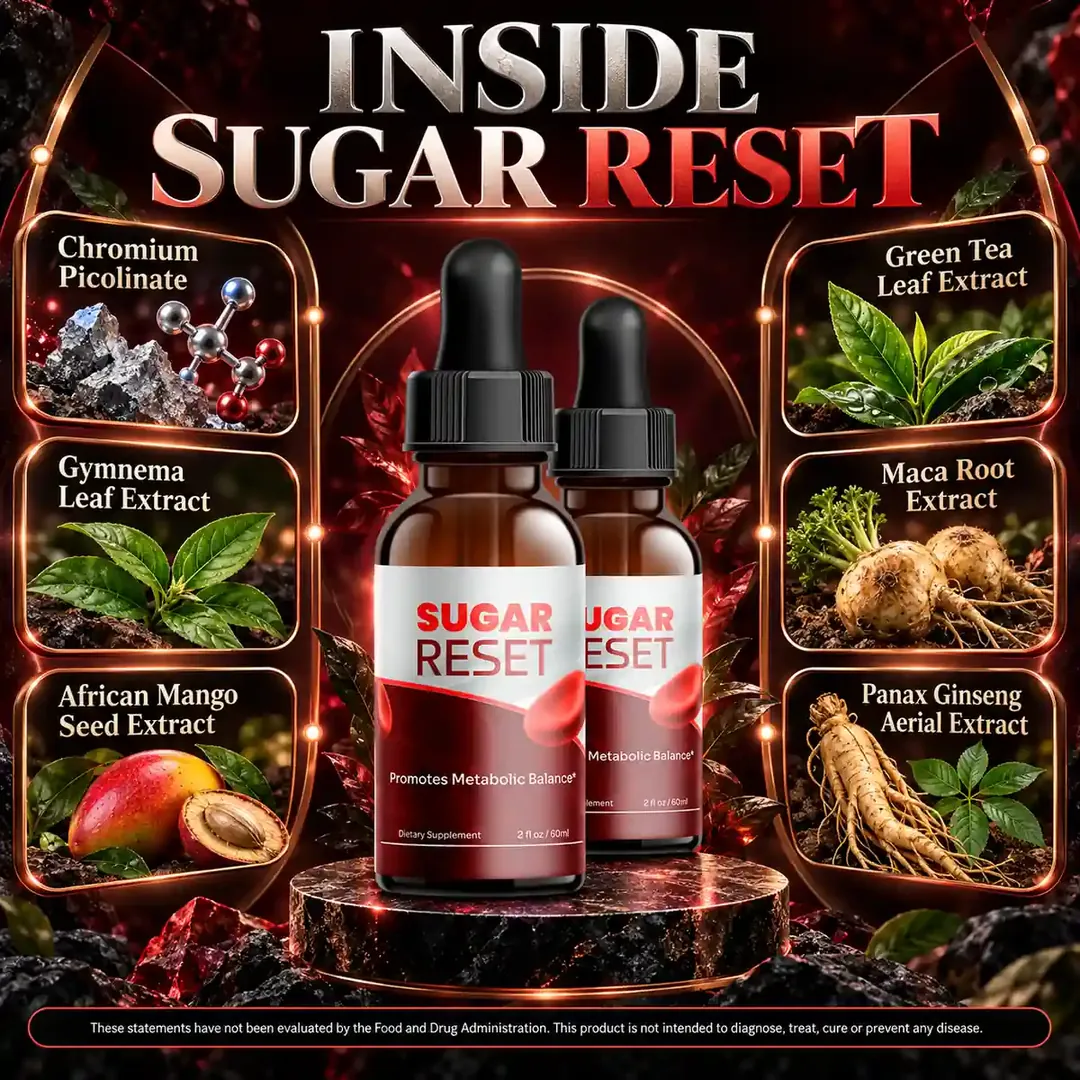
Gymnema is a leaf. Its Latin name is Gymnema sylvestre, and it comes from Ayurvedic practice, where it was traditionally taken for sugar cravings and blood sugar. On the Sugar Reset label it appears as Gymnema Leaf Extract, eighth in the blend list.
The sales page puts gymnema in its short list of six named ingredients. That is why many buyers search for it by name. They ask whether the leaf is the reason the drops might help, and whether it is safe.
This post checks four myths about gymnema in this bottle. We use the label, the sales page and the sources named on this site. We do not claim the drops treat or cure anything. Sugar Reset is a dietary supplement and it is not FDA approved.
The key limit is simple. The label does not print the gymnema amount. It sits inside a 200 mg proprietary blend shared by 22 ingredients. So every claim about “the gymnema dose” in this bottle is a claim about a number nobody has published.
Key facts at a glance
- Gymnema Leaf Extract is in the 200 mg proprietary blend. Its amount is not published.
- Our sources say there is no single established effective dose for gymnema.
- A 2003 systematic review in Diabetes Care found encouraging early results for some herbs, gymnema among them, and judged the evidence too thin for a firm conclusion.
- An EFSA risk assessment records cases of serious low blood sugar when gymnema was combined with antidiabetic drugs.
- In some of those cases the medicine dose had to be reduced or stopped.
- The label asks anyone with a known medical condition to consult a physician first.
Four gymnema myths, checked one by one
| Myth | What the sources show | Verdict |
|---|---|---|
| “Gymnema is proven to lower blood sugar.” | Early results were encouraging; reviewers said the evidence was too thin for a firm conclusion | Overstated |
| “The bottle has a studied dose of gymnema.” | The amount is not published, and there is no single established effective dose | False |
| “It is a leaf, so it cannot clash with medicine.” | A risk review records low blood sugar when it met antidiabetic drugs | False |
| “Gymnema is the whole product.” | It is one of 22 names sharing a 200 mg blend, plus chromium | False |
The first myth matters most. Early positive results are not the same as proof. The authors of the 2003 review said so themselves, and we repeat their caution here.
Is there a gymnema dose to compare with?
Not really. Our sources say reviewed trials of gymnema for glycemic control used varying amounts. Many used a standardized extract, with GS4 given as an example, and the extract was often taken alongside diabetes medication.
Read that last part again. In many trials gymnema was not tested alone. It was an add-on to medicine. So even if a trial showed a drop in blood sugar, the cause could be the medicine, the extract or both together.
For Sugar Reset there is a second gap. The label gives no extract ratio and no standardization for any plant in the blend. Both are listed on this site as not published. Without them, you cannot even tell whether this leaf extract resembles the one in a trial.
No gymnema amount is printed. No standard dose exists to compare it with. Anyone who quotes a gymnema number for this bottle is guessing.
What does gymnema do next to diabetes medicine?
This is the part that deserves your attention. Our sources say gymnema may lower blood sugar. Insulin, metformin and sulfonylureas do the same job by other routes. Two things pulling the same way can pull too far.
The EFSA risk assessment by Marakis and colleagues (2018) documents cases of serious low blood sugar when gymnema was combined with antidiabetic drugs. In some patients the medicine dose had to be cut or stopped. That is a safety finding, not a benefit.
So the rule is short. If you take any glucose-lowering medicine, talk to the prescriber before the first dose. Bring the bottle. Keep testing as your clinician asked. Do not change a prescribed dose on your own, in either direction.
Shakiness, sweating or sudden confusion can mean blood sugar is running low. Treat that as urgent and call a clinician.
For a wider look at the safety side, see our safety myths post.
Where does gymnema sit on the Sugar Reset label?
Gymnema Leaf Extract is the eighth name in the blend, between green tea leaf extract and coleus forskohlii root extract. US rules list blend ingredients from the heaviest to the lightest, so maca leads the list and L-carnitine closes it. By that order, gymnema falls in the upper-middle of the 22.
Do not over-read that. Order tells you rank, not milligrams. A leaf that ranks eighth could still be a few milligrams or a lot more. The label does not say.
| Item | What is published |
|---|---|
| Ingredient name on label | Gymnema Leaf Extract (Gymnema sylvestre) |
| Position in the 22-ingredient blend | Eighth |
| Total blend weight | 200 mg per 1 ml serving |
| Gymnema amount | Not published |
| Extract ratio or standardization | Not published |
| Suggested use | Take 1 or 2 droppers full daily |
| Guarantee | 60 days from the purchase date; buyer pays return shipping |
Does the sweet-tooth story hold up in a sweetened liquid?
The folk story says gymnema tames sugar cravings. We could not find that claim on the Sugar Reset label or the sales page, so we will not attach it to the bottle. The front label says only “Promotes Metabolic Balance.”
There is an irony worth noting. The drops are sweetened with stevia extract and xylitol, which the label lists among the other ingredients. A reader who hopes gymnema will tame a sweet tooth should know the liquid itself tastes sweet by design.
None of this is a criticism. It is simply a reminder to read what is printed. The sales page lists five support statements, such as supporting balanced blood sugar levels. They are the seller’s wording. They are not label claims and not proof.
How should you decide about a gymnema product?
Use a short checklist. It works for this bottle and for any other.
- Ask whether the gymnema amount is printed. Here it is not.
- Ask whether you take any medicine for blood sugar. If yes, call your prescriber first.
- Ask whether the claim is a support statement or a disease claim. Walk away from disease claims.
- Check the order page for the real price. The sales page lists 2 bottles at $158, 3 at $207 and 6 at $294.
- Remember the 60-day window runs from the purchase date, not the delivery date.
Frequently asked questions
Is gymnema in Sugar Reset?
Yes. Gymnema Leaf Extract is listed in the 200 mg proprietary blend, and the sales page names it among six ingredients. Its individual amount is not published.
How much gymnema is in one dropper?
That figure is not published. The label gives only the combined weight of 200 mg for all 22 blend ingredients.
Can gymnema lower blood sugar too much?
Our sources say gymnema may lower blood sugar. An EFSA risk assessment records serious low blood sugar when it was combined with antidiabetic drugs, so ask your prescriber first.
Is there a standard gymnema dose?
Our sources say no single effective dose is established. Reviewed trials used varying amounts, often a standardized extract taken with diabetes medication.
Does the Sugar Reset label say gymnema helps with sugar cravings?
No. The front label claims only Promotes Metabolic Balance. The sales page uses support statements, and none of them is a craving claim.
Should I stop my diabetes medicine if I take Sugar Reset?
No. Never stop or change a prescribed medicine on your own. Speak to the clinician who prescribes it.
Our view
Our view: gymnema is the ingredient that most deserves a pharmacist’s eye, not the one that most deserves a big promise. The research is thin, the dose is not printed, and the medicine warning is real.
If you do not take glucose-lowering medicine and have no condition the label flags, the risk picture is calmer. Even then, no result is promised. See our claim-by-claim check for the wider evidence.
See the label and terms in one place
The 60-day guarantee on the sales page is a purchase term. It does not promise any effect on blood sugar.
This site earns a commission on orders placed through its order buttons.