Habits That Steady Blood Sugar
Meal composition and order, a short walk after eating, consistent sleep, careful alcohol timing, stress management and modest weight loss carry the strongest, longest-standing support for steady blood sugar. Weigh any supplement against that backdrop, not in place of it.
A bottle is not the whole plan
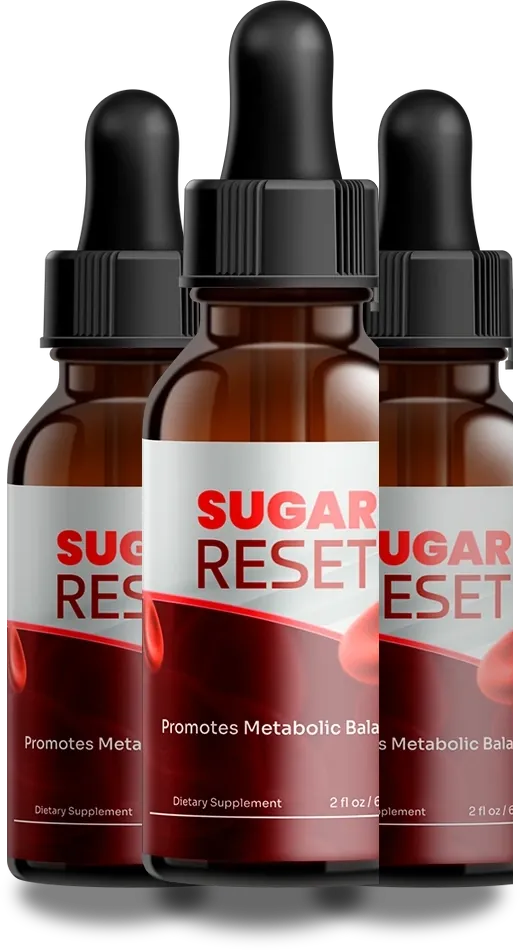
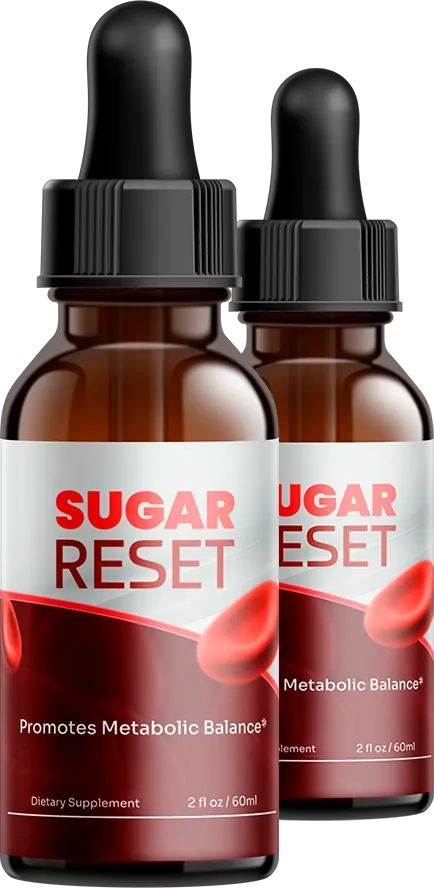
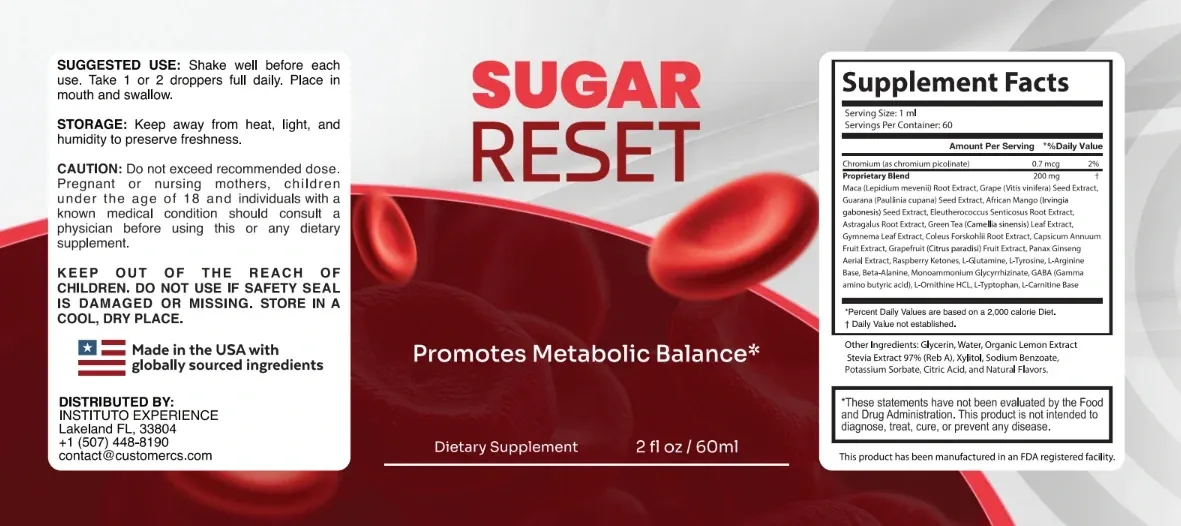
A bottle of Sugar Reset arrives with directions for exactly one thing: a dropper, once or twice a day. Everything else about a day, breakfast, a commute, a bad night's sleep, a glass of wine, keeps happening whether or not you took a dose. Those other habits carry more weight for blood sugar than any drop, dose or capsule sold to support it.
The front of this label carries one line: "Promotes Metabolic Balance." That single printed claim is a fair summary of what a supplement can honestly promise on its own. The habits below are where the rest of the work actually happens.
None of that is a reason to feel judged about where your routine stands today. It is a reason to know which habits have the strongest backing, so you can put effort where it actually counts, and judge a supplement fairly against that backdrop rather than in place of it.
What a meal is made of
Worth saying up front, plainly: everything in this section is general nutrition guidance, the kind found in standard dietary advice for blood sugar, rather than a finding tied to a specific study cited on this page.
A meal built mostly around refined carbohydrate, white bread, sugary drinks, pastries, tends to push blood sugar up quickly and steeply. Adding protein, fibre and some fat to the same plate slows that rise, because those three digest more slowly and blunt how fast sugar reaches the bloodstream. This is not about cutting carbohydrate out. It is about rarely eating it alone.
| Meal pattern | General effect on the rise after eating |
|---|---|
| Carbohydrate eaten alone (juice, white toast, a sugary snack) | Fast, steep rise |
| Same carbohydrate with protein and fibre added | Slower, flatter rise |
| A plate led by vegetables, protein and healthy fat, with carbohydrate as one part of it | The gentlest of the three patterns |
A useful, simple version of this: before you build a meal around the carbohydrate, ask what protein, vegetable or fat is going alongside it.
The order you eat things in
This is a smaller, more specific version of the same idea, again general dietary guidance rather than a cited trial finding here.
Within one meal, the order you eat things in can matter almost as much as what is on the plate. Eating vegetables and protein first, and saving bread, rice or dessert for last, tends to produce a gentler rise than eating the same foods in reverse, or all mixed together from the first bite. The theory is straightforward: fibre and protein slow digestion, and eating them first means the carbohydrate that follows meets a stomach already doing some of that slowing work.
It costs nothing and needs no new ingredients, which makes it one of the easier habits on this list to actually keep.
A short walk after eating
Again, general activity guidance rather than a citation tied to a specific trial on this page.
Muscles pull sugar out of the bloodstream when they work, and walking is about the lowest-effort way to put a muscle to work right when a meal has just raised blood sugar the most. Ten to fifteen minutes on your feet after the largest meal of the day is the version of this habit most people can actually manage, repeated day to day, rather than a single long workout done occasionally.
- A walk right after eating tends to help more than the same walk an hour later
- Any movement counts more than none, even a short one around the block or the office
- Consistency across most days matters more than one especially long walk
This habit costs no money and needs no bottle. It sits well alongside Sugar Reset or any other routine, and it does not depend on what a supplement label does or does not disclose.
Sleep, and why it counts here too
General sleep and metabolic guidance follows here, not a specific cited study.
Short or disrupted sleep is linked, broadly and repeatedly in everyday clinical guidance, with reduced insulin sensitivity the next day, meaning the same meal can produce a bigger rise after a poor night than after a good one. It also tends to nudge appetite and cravings toward exactly the foods that make the rest of this list harder: refined carbohydrate and sugar. A handful of nights of bad sleep will not undo months of good habits, but a consistent pattern of short sleep is worth treating as seriously as diet or movement, not as an afterthought to them.
Alcohol, and where it gets riskier
General guidance again, though the medication-timing point below is worth taking seriously regardless.
Alcohol affects blood sugar in two different directions depending on timing. A drink with a carbohydrate-heavy meal can add to the rise. Several hours later, and especially overnight, alcohol can instead push blood sugar down, because the liver is busy processing it rather than releasing stored sugar the way it normally would. That second effect is the one that catches people out, since it shows up well after the drink itself.
Anyone on insulin, a sulfonylurea, or another medicine that can already push blood sugar down should treat evening drinking with particular care, since the medicine's effect and alcohol's delayed effect can land at the same time. The same caution applies to gymnema and chromium inside Sugar Reset's own blend, which safety reviews flag for the same reason when combined with glucose-lowering medicine (Marakis et al., 2018).
None of this means alcohol is off the table entirely for everyone. It means timing and moderation matter more here than with most foods, and anyone on blood-sugar-lowering medicine should ask their own clinician what is reasonable for their situation.
Stress hormones do their own thing
General physiology, not a cited trial finding.
Stress triggers hormones, cortisol and adrenaline among them, whose job is partly to release stored sugar so muscles have fuel ready for a fight-or-flight response that, for most modern stress, never actually arrives. The sugar gets released anyway. Chronic, ongoing stress means that response firing repeatedly, day after day, which is one reason a stressful stretch of life can coincide with harder-to-explain shifts in blood sugar even when eating and activity have not obviously changed.
None of the usual stress-management habits, whatever works for a given person, are ingredients in a bottle. They are still worth treating as part of the same picture as diet and movement, not a separate concern.
Weight, in modest amounts
General clinical guidance, not a specific cited trial.
Fat carried around the middle of the body is linked with reduced insulin sensitivity more strongly than fat carried elsewhere. The often-cited encouraging part of this is that the benefit does not require reaching some ideal weight: modest, sustained loss, commonly cited in the range of five to ten percent of body weight, is repeatedly associated with a measurable improvement in blood sugar markers for people who are carrying excess weight to begin with.
That is a slower lever than a meal choice or a walk, and it works through the same basic inputs as the rest of this list: food, movement and sleep, sustained over months rather than days.
Does a supplement add anything on top of these habits?
Here is a fair way to weigh a supplement like Sugar Reset against the habits above: how many trials support it, and how consistent are the results.
| Habit or product | Type of support behind it | How consistent the results are |
|---|---|---|
| Meal composition, order and post-meal walking | General clinical and dietary guidance, widely taught, not a single trial cited on this page | Consistently reported across everyday practice |
| Sleep and stress management | General clinical guidance | Consistently reported across everyday practice |
| Sugar Reset's chromium (0.7 mcg) | Chromium trials exist, but at 200 to 1,000 mcg a day; a 2016 review of 20 of them found only limited effectiveness even at those doses (Costello et al., 2016) | Inconsistent, and not tested anywhere near this label's amount |
| Sugar Reset's gymnema and green tea | Reviewed in small or short trials with preliminary or modest results (Yeh et al., 2003, Xu et al., 2020) | Limited, and this label's amounts are not published |
NCCIH is direct about the category as a whole: for most supplements studied for diabetes, research has been too limited in number, size and quality to prove they work, and it explicitly warns against replacing medical treatment with an unproven product (National Center for Complementary and Integrative Health (NCCIH), 2024). Sugar Reset is not a diabetes treatment, and none of the habits above change that: prescribed medicine and regular testing continue unless a clinician says otherwise.
A reasonable way to judge any add-on, this one included: does it ask you to change or skip anything your clinician actually prescribed? If yes, that is a hard stop until you have checked with them. If no, does it cost you anything real, money, side effects, an interaction with something else you take, to find out whether it helps? Weigh that cost against habits above that carry no such cost and a longer track record.
For the label details behind that chromium and gymnema comparison, see our guide to reading this product's panel. For the caffeine and grapefruit questions the same blend raises, see what hides in a metabolic blend, and for a day-by-day routine, see the daily glucose routine guide.
Questions readers ask
What habit has the strongest support for steady blood sugar?
Meal composition, pairing carbohydrate with protein and fibre rather than eating it alone, is one of the most consistently taught habits, alongside regular movement and sleep.
Does eating order really change how a meal affects blood sugar?
General dietary guidance suggests eating vegetables and protein before carbohydrate produces a gentler rise than eating the same foods in reverse or all at once.
How soon after eating should I walk?
General guidance points to walking right after a meal, for ten to fifteen minutes, as more useful than the same walk taken an hour or more later.
Can poor sleep really affect blood sugar the next day?
Broadly, yes. Short or disrupted sleep is commonly linked with reduced insulin sensitivity the following day in everyday clinical guidance.
Is alcohol always bad for blood sugar?
It depends on timing. It can add to a rise alongside a carbohydrate-heavy meal, but hours later, especially overnight, it can instead push blood sugar down, which matters more for anyone on glucose-lowering medicine.
How much weight loss actually helps blood sugar?
Modest, sustained loss, often cited around five to ten percent of body weight, is repeatedly associated with measurable improvement for people carrying excess weight, without needing to reach an ideal weight.
Does Sugar Reset replace any of these habits?
No. None of Sugar Reset's ingredients are tested at a disclosed, comparable dose, and the sales page makes no claim to replace diet, movement, sleep or prescribed medicine.
How do I fairly judge whether a supplement is worth adding?
Ask whether it asks you to change anything prescribed (a hard stop if so), then weigh its cost, money, possible side effects or interactions, against habits with a longer, more consistent track record (National Center for Complementary and Integrative Health (NCCIH), 2024).
Keep reading
Caffeine and grapefruit in supplements
Why guarana and green tea add unlisted caffeine to metabolic blends, why grapefruit extract concerns pharmacists, and ho...
Read →Reading a dropper label
Serving size in ml, dropper accuracy, servings per container, blend totals and what "not published" means, worked throug...
Read →How much does Sugar Reset cost?
Kit sizes, how long each lasts and which one suits a first order.
Read →Start the Sugar Reset routine from the authorized outlet
Sixty 1 ml doses fill every bottle, and the kits work out at $79, $69 or $49 a bottle with sixty days to ask for a refund. Not sure which kit fits your routine? The kit comparison sets them side by side.