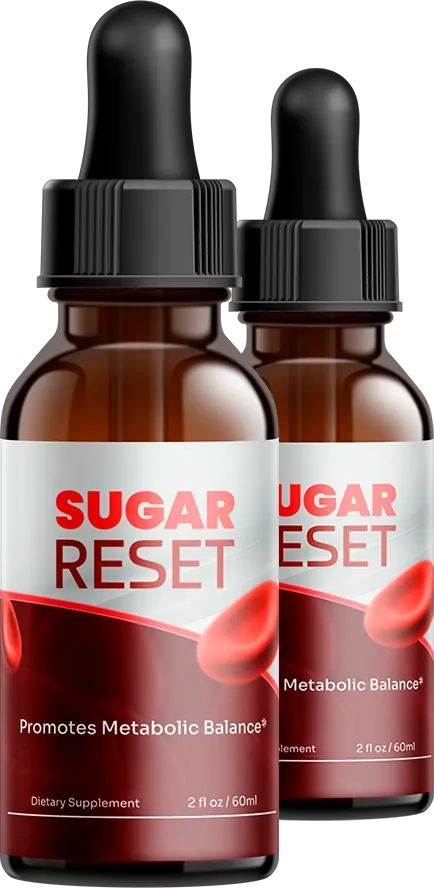
Sugar Reset Ingredients: L-Arginine, GABA, L-Tryptophan and Other Amino Acids
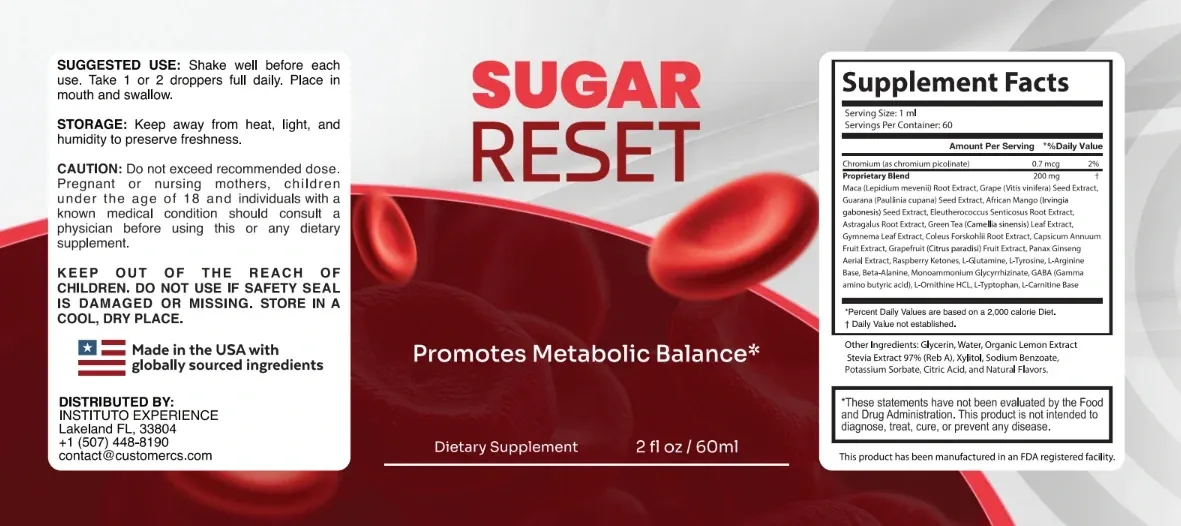
Eight of the 22 names in the Sugar Reset blend are amino acids or close relatives: glutamine, tyrosine, arginine, beta-alanine, ornithine, tryptophan, carnitine and GABA. The label prints no amount for any of them. They sit late in the list, so each is likely a small share. We hold no research on them at these amounts.
What are the amino acids in Sugar Reset drops?
Most search traffic for this product goes to the six names on the sales page. The back panel of the bottle tells a longer story. Tucked in the second half of the 200 mg blend are eight names that read like a sports shop shelf.
This page walks through them one at a time. For each, we give what the label prints and what the Sugar Reset pages say the ingredient is usually sold for. We do not give a dose or an effect, because the label gives no amount, and the sources we hold give no study of these names at this scale.
That is the honest limit of an ingredient page on a blend. A name on a list tells you what is in the bottle. It does not tell you how much, and it does not tell you what the name will do for you.
Under US labelling rules, a blend is listed from the heaviest part to the lightest. Names near the end, like these, are likely the smaller shares. The exact split is not published.
Key facts at a glance
- The eight names are Beta-Alanine, L-Arginine Base, L-Ornithine HCL, L-Glutamine, L-Tyrosine, L-Tryptophan, L-Carnitine Base and GABA (gamma-aminobutyric acid).
- All eight share the 200 mg proprietary blend with the other names. The label gives no weight for any one of them.
- L-Carnitine Base is the last name on the list, so it is the smallest share by label order.
- The sources we hold give no research dose and no trial for these names inside this formula. We write “not published” where a fact is missing.
- The label caution applies to all of it: stay within the stated dose, and see a physician beforehand if you are pregnant, nursing, under 18 or have a known medical condition.
- Sugar Reset is not FDA approved, and no supplement is. It is not a diabetes treatment.
Which eight names are the amino acids, and what are they usually sold for?
The table below uses the plain-language descriptions from the ingredients page of this site. They describe how each name is commonly marketed. They are not findings about this bottle.
| Ingredient on the label | Usually sold for | Amount in one dropper |
|---|---|---|
| Beta-Alanine | Sports and endurance products | Not published |
| L-Arginine Base | Circulation and exercise formulas | Not published |
| L-Ornithine HCL | Recovery formulas, often paired with arginine | Not published |
| L-Glutamine | Recovery and gut-support formulas | Not published |
| L-Tyrosine | Focus and alertness blends | Not published |
| GABA (gamma-aminobutyric acid) | Relaxation or sleep blends | Not published |
| L-Tryptophan | Sleep and mood support | Not published |
| L-Carnitine Base | Energy and fat metabolism | Not published |
Read down the middle column. These are the uses of the ingredients elsewhere. None of the lines is a blood sugar claim, and the Sugar Reset label does not claim any of them.
Which amino acid myths are worth checking?
A long list of familiar names makes a formula look serious. Four beliefs follow from that look.
Myth: familiar names mean familiar amounts
In the shops, these names are often sold alone in gram-sized servings. Here they share a total of 200 mg with the rest of the 22 names. The label does not show the split.
Myth: they were added to lower blood sugar
The label says no such thing. The front claims only Promotes Metabolic Balance. The sales page does not name these eight at all.
Myth: the order on the label is random
It is not. US rules list blend ingredients heaviest first, so these late names are likely smaller shares than maca, which leads.
Myth: natural or amino means harmless
Amino acids are normal food parts, yet a supplement dose is not a food dose. For these names, our sources give no safety data at the amounts here, so we say none is published.
How much could each name be?
We cannot know, and we will not pretend to. We can do the plain sum that the label allows.
The blend weighs 200 mg. Twenty-two names share it. An even split would be about 9 mg for each. Real blends are rarely even, and label order says the early names are larger. So the eight names discussed here likely sit at or below that even split, though the label does not confirm it.
| Question | Answer from the label |
|---|---|
| Total blend weight | 200 mg |
| Names sharing it | 22 |
| Even split, for scale only | About 9 mg each |
| Which names are largest? | The early ones (maca leads), by label order |
| Exact weight of any one name | Not published |
| Caffeine total from guarana and green tea | Not published |
Use the 9 mg figure only as a yardstick. It shows why a blend this size cannot hold a gram-level dose of many names at once.
What do we hold about these names, and what is missing?
We hold the label, the sales page and the studies named on this site. Those studies cover chromium, gymnema, African mango, green tea, maca and Panax ginseng. They do not cover glutamine, tyrosine, arginine, beta-alanine, ornithine, tryptophan, carnitine or GABA.
- No study dose is listed for any of the eight names.
- Our sources list no trial of the finished bottle.
- No safety review of these names at the amounts in this bottle is listed.
- No extract grade or purity figure is printed for any name.
- No reason is printed for why these names were chosen.
Missing is not the same as bad. It means you are choosing with less information than a single-ingredient bottle would give you.
Who should ask a clinician before trying a blend like this?
The label's own caution names pregnant or nursing mothers, children under 18 and anyone with a known medical condition. Our Sugar Reset pages add anyone on glucose-lowering medicine, anyone told to avoid grapefruit with a prescription, and anyone managing blood pressure, potassium, liver or kidney conditions.
Those flags come from other names in the blend, not from the amino acids. For the eight amino acid names, the sources we hold give no interaction list, so a pharmacist is the right person to ask, with the bottle in hand.
The full list of 22 blend names, the 0.7 mcg chromium line and your own medicine list. Ask whether any name needs a closer look for you.
What does this mean for your decision?
If you shop by ingredient, this blend asks you to accept two gaps: no split and no study at these amounts. If you shop by habit and by terms, the picture is simpler: a daily dropper, a printed refund window and a maker named on the label.
As printed, two bottles are $158, three are $207 and six are $294. One refund window of 60 days covers all three, and the return postage is the buyer's.
Frequently asked questions
Which amino acids are in Sugar Reset?
Seven are amino acids or close kin: beta-alanine, L-arginine, L-ornithine, L-glutamine, L-tyrosine, L-tryptophan and L-carnitine. The eighth is GABA. All sit inside the 200 mg proprietary blend.
How much L-arginine or GABA is in one dropper?
Not published. The label gives one total for the whole blend and no weight for any single name.
Do the amino acids lower blood sugar?
The label does not claim that. Its front claim is Promotes Metabolic Balance. The sources we hold contain no study of these names for blood sugar.
Why are they late in the ingredient list?
US rules list blend names from largest share to smallest. Late names are likely smaller shares, although the exact amounts are not published.
Are these amino acids safe with my medicine?
We hold no interaction list for them at these amounts. Bring the label to a pharmacist, especially if you take glucose-lowering, blood pressure or grapefruit-flagged medicine.
Is the sales page list the same as the label list?
No. The sales page names six ingredients. The label lists chromium on its own line and 22 more names in the blend, including all eight amino acid names.
Our view
Our view: the amino acid names are the quietest part of this label, and that is the reason to read them. They tell you the formula is broad, and the missing weights tell you that broad does not mean strong.
We do not call the formula bad for having them. We call it hard to judge, because nothing public ties these names to a dose, a study or a promised result. Judge the bottle by its printed terms and your own notes, and let your pharmacist read the full list.
More detail: the full ingredients check, the 200 mg blend explained and the ingredients page.
Read the whole panel before you decide
The bottle, the label and the 60-day terms are all on the official order page. Compare them with this page, then choose at your own pace.
This site earns a commission on orders placed through its order buttons.